- English
- Español
- Português
- русский
- Français
- 日本語
- Deutsch
- tiếng Việt
- Italiano
- Nederlands
- ภาษาไทย
- Polski
- 한국어
- Svenska
- magyar
- Malay
- বাংলা ভাষার
- Dansk
- Suomi
- हिन्दी
- Pilipino
- Türkçe
- Gaeilge
- العربية
- Indonesia
- Norsk
- تمل
- český
- ελληνικά
- український
- Javanese
- فارسی
- தமிழ்
- తెలుగు
- नेपाली
- Burmese
- български
- ລາວ
- Latine
- Қазақша
- Euskal
- Azərbaycan
- Slovenský jazyk
- Македонски
- Lietuvos
- Eesti Keel
- Română
- Slovenski
- मराठी
- Srpski језик

Prime Autumn Pig Farming Season: Scientific Management for Stable Efficiency Improvement — Debabrother Optimizes Pig Farm Management in Autumn
Autumn features cool and pleasant weather, making it the golden growth and fattening period for pigs. However, sharp diurnal temperature fluctuations (over 10℃) and variable humidity in autumn lead to a high incidence of respiratory and digestive diseases among pig herds. Meanwhile, new crop feed hits the market and feeding modes need dynamic adjustment. Improper management will directly hinder pig growth and reduce overall farm profits. With 16 years of dedicated experience in animal husbandry, Debabrother integrates advanced European breeding technologies with local Chinese farming practices. We launch a full-process autumn pig farming solution covering environmental control, epidemic prevention, nutritional matching and standardized breeding, helping pig farms seize the prime autumn farming opportunity to cut costs, boost efficiency and achieve stable high-yield production.
1. Precise Temperature & Environmental Regulation to Build Solid Foundation for Autumn Breeding
As temperatures drop from hot summer to cool autumn, huge day-night temperature differences bring cold stress to pigs, easily causing diarrhea, respiratory diseases and other stress reactions. Balancing heat preservation and ventilation is the core of autumn pig house environmental management.
Debabrother recommends comprehensive pre-autumn inspection and maintenance for all pig houses: seal all air leakage gaps on walls, doors and windows thoroughly to prevent cold draft invasion; pave dry hay bedding inside barns to keep the living area dry and soft and avoid bacterial growth caused by dampness. With decreasing ambient temperature, farmers can moderately increase stocking density to maintain indoor temperature via pig self-heat dissipation, abandoning the low-density heat dissipation mode adopted in summer and improving barn space utilization.
The ventilation management principle should be followed: increase ventilation on sunny days, reduce ventilation on rainy days; prioritize ventilation at noon with moderate ventilation in morning and evening. The optimal ventilation time is from 10:00 to 15:00 every day. Equipped with Debabrother EC Variable Frequency Ventilation System, pig houses can realize intelligent air volume regulation. The system efficiently discharges harmful gases including ammonia and hydrogen sulfide while introducing fresh outdoor air, avoiding direct cold wind blowing on pig herds. It achieves constant warm air circulation without stuffiness or cold draughts, creating a stable and comfortable growing environment for pigs.
2. Multi-dimensional Autumn Epidemic Prevention & Control to Secure Breeding Safety
Autumn is a high-incidence season for swine respiratory diseases, foot-and-mouth disease, eperythrozoonosis and streptococcicosis. These epidemic diseases spread fast and cause severe losses, so prevention-oriented strategies combined with timely treatment are essential.
2.1 Targeted Prevention of Respiratory Diseases
Sudden temperature drops, damp barns and poor ventilation often trigger outbreaks of cough, asthma and infectious pleuropneumonia. Farmers need to continuously optimize barn environments to keep indoor spaces dry and clean and reduce dust and pathogen proliferation. Conduct regular disinfection on pig houses, feeding equipment and passages, clean barns daily, and implement full-scale disinfection every 3 days to inhibit harmful bacteria reproduction.
2.2 Strengthen Vaccination & Immunity
Foot-and-mouth disease is mainly caused by insufficient antibody levels. Farmers need to increase vaccine dosage and injection frequency after autumn comes to build a solid immune barrier with high-efficiency vaccines. Besides, complete routine vaccination against swine fever, pseudorabies and eperythrozoonosis as scheduled. Large-scale pig farms shall implement programmed immunization, while small-scale household farms adopt centralized immunization plus supplementary enhanced immunization to build a full-cycle epidemic prevention system.
2.3 Standardized Biosecurity Management
Strictly implement disinfection protocols including disinfection with pigs present and disinfection of empty barns. Alternate high-efficiency disinfectants such as potassium peroxymonosulfate to prevent bacterial drug resistance. Strengthen access control for personnel and vehicles: external staff must complete clothes changing and full disinfection before entering; all vehicles need thorough washing and sterilization. Clean manure and ponding timely to keep internal and external barn areas hygienic, cutting off pathogen transmission routes fundamentally.
3. Optimized Nutritional Feeding to Stimulate Pig Growth Potential in Autumn
Pigs feature faster metabolism and higher feed intake in autumn, while extra energy consumption is required under low-temperature conditions. Accurate nutritional supply directly determines fattening efficiency and overall breeding costs. Tailored for autumn farming characteristics, Debabrother launches targeted feeding solutions with enhanced energy density, better palatability and higher digestibility to meet nutritional demands of pigs at different growth stages.
3.1 Optimize Feed Formula to Improve Energy Density
Adjust feed formulas timely in autumn by increasing the proportion of energy feed such as corn and adding appropriate vegetable oil to supplement extra energy consumed by pigs in low-temperature environments. Make full use of local autumn raw materials including new corn, sweet potatoes, peanut vines and bean straws. After crushing or anaerobic fermentation, these raw materials can be matched with commercial feed to lower feeding costs and enrich dietary nutrition structures.
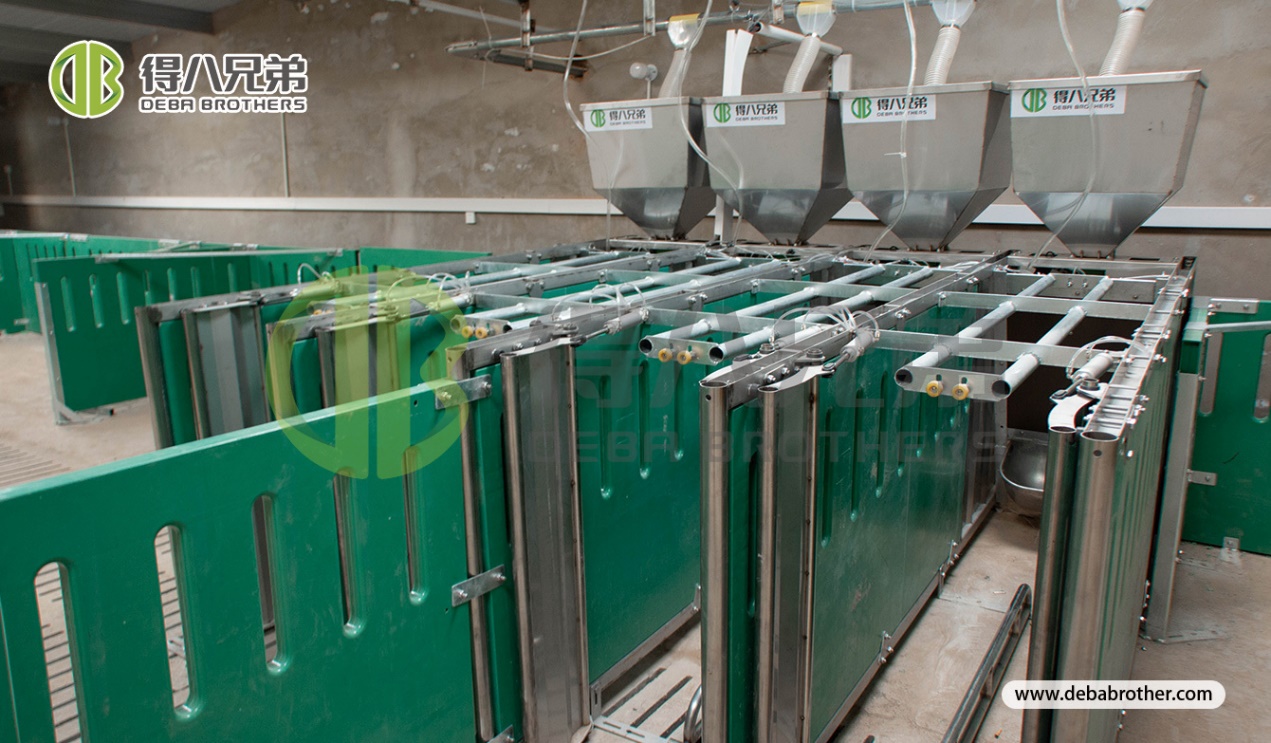
3.2 Promote Liquid Feeding System to Boost Feed Conversion Rate
Newly harvested corn contains 30%-40% moisture. After anaerobic fermentation into liquid feed, it owns greatly improved palatability and significantly higher feed conversion rate. Debabrother Liquid Feeding System is compatible with both gestating sows and fattening pigs: gestating sows gain stronger satiety and stable mental status with steadily improved feed intake; fattening pigs achieve 9.19%-12.08% higher digestive utilization rate, enjoying faster growth speed and earlier market delivery. Currently, liquid feeding technology has been applied in 30% of European pig farms. The mature Asserva liquid feeding system from France has proven outstanding breeding efficiency with wide market coverage.
3.3 Strict Feed Quality Control to Avoid Mold Risks
Frequent autumn rains lead to humid storage environments and high feed mold risks. Moldy, frozen or irritating feed is strictly prohibited to prevent pig diarrhea, poisoning and sow abortion. Keep feed formulas stable to reduce feeding stress caused by frequent formula replacement, and take moisture-proof storage measures to guarantee feeding safety from the source.
4. Standardized Breeding Management to Balance Production and Stabilize Profits
As summer high temperature fades away, sow estrus and mating rates rise sharply in autumn, easily leading to concentrated mating and centralized farrowing peaks before the Spring Festival. However, dense farrowing usually brings higher morbidity and mortality of piglets, reducing overall slaughter efficiency instead.
Debabrother suggests sticking to regular mating plans and avoiding blind excessive mating to balance farrowing rhythm, relieving management pressure and epidemic risks caused by centralized delivery. In addition, adopt the Electronic Feeding Station for Gestating Sows to realize precise body condition monitoring: target backfat thickness is 15-17mm for replacement gilts and 16-17mm for weaned sows. Stage-based precise feeding ensures sound embryonic development and sow health, improving conception rate and piglet quality effectively.
5. Rooted in Front-line Breeding to Empower Full-chain Autumn Farming Upgrade
Over the past 16 years, Debabrother has always focused on seasonal farming pain points. Combining advanced European breeding expertise with localized domestic demands, we have built an integrated autumn breeding solution consisting of intelligent equipment, scientific feeding schemes and professional technical services. Our full-series products including EC Variable Frequency Ventilation System, liquid feeding equipment and Electronic Feeding Station for Gestating Sows help pig farms solve all key autumn farming challenges covering environmental control, epidemic prevention, nutritional regulation and breeding management.
In the future, Debabrother will continue to focus on seasonal breeding difficulties, optimize equipment performance iteratively, upgrade feeding programs and improve full-process technical services. Empowering modern animal husbandry via technological innovation and creating value via professional services, we help global pig farms seize the golden autumn growth period to realize stable production, quality improvement and cost reduction, injecting strong momentum into the high-quality development of China’s animal husbandry industry.