- English
- Español
- Português
- русский
- Français
- 日本語
- Deutsch
- tiếng Việt
- Italiano
- Nederlands
- ภาษาไทย
- Polski
- 한국어
- Svenska
- magyar
- Malay
- বাংলা ভাষার
- Dansk
- Suomi
- हिन्दी
- Pilipino
- Türkçe
- Gaeilge
- العربية
- Indonesia
- Norsk
- تمل
- český
- ελληνικά
- український
- Javanese
- فارسی
- தமிழ்
- తెలుగు
- नेपाली
- Burmese
- български
- ລາວ
- Latine
- Қазақша
- Euskal
- Azərbaycan
- Slovenský jazyk
- Македонски
- Lietuvos
- Eesti Keel
- Română
- Slovenski
- मराठी
- Srpski језик

Improving Pig Farm Animal Welfare – China Edition
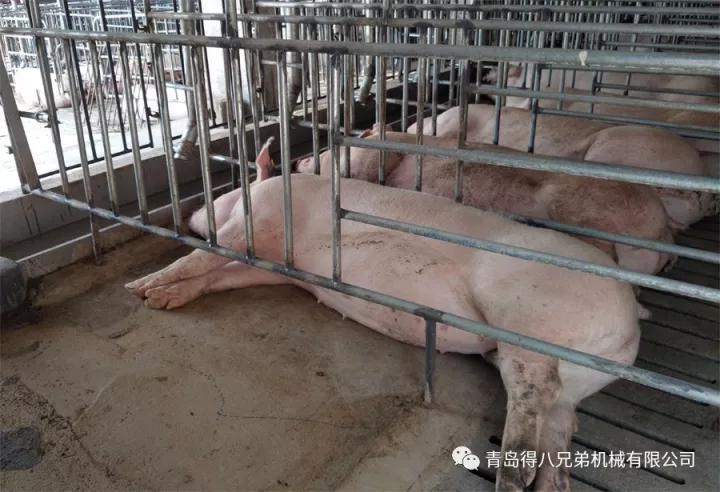
Pigs are among the most intensively farmed livestock animals worldwide. The vast majority of pigs endure suffering throughout every stage of their lives with little quality of life. For their entire lifespan, most pigs are confined to narrow pens with bare concrete floors.
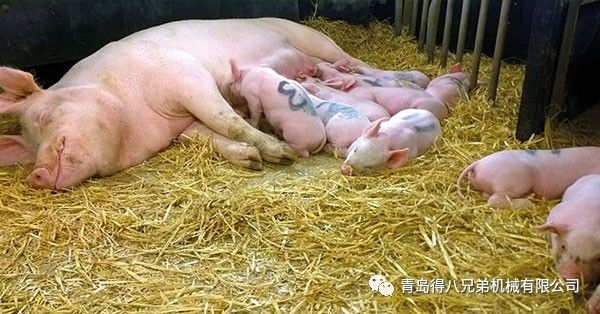
With enriched group housing systems for gestating sows and free farrowing systems, sows can move freely and interact with herd mates. They enjoy better physical health and less mental stress, and are able to express natural instincts such as nest-building and nurturing piglets.
World Animal Protection operates across major pig-producing regions globally, committed to improving the treatment of farm animals and launching global campaigns to continuously lift livestock welfare standards.
In China, many breeding enterprises are actively upgrading animal welfare. DBN Group announced plans to adopt enriched group housing for sows. By expanding activity space for market pigs, installing environmental enrichment facilities and laying bedding materials, the group aims to boost welfare levels of finishing pigs.
Definition of Environmental Enrichment
Environmental enrichment refers to modifying the physical living environment of captive animals to improve environmental quality, enhance biological functions such as reproductive success and adaptability, and thereby raise animal welfare standards. Hal Markowitz first carried out environmental enrichment trials at Portland Zoo in the United States back in 1982.
From 2010 to 2013, researchers conducted two rounds of environmental and feeding enrichment experiments on 10 Tibetan gazelles at the breeding base of Shanghai Zoo. They analyzed how enrichment altered the gazelles’ daily time allocation, as well as behavioral rhythms of adult and sub-adult gazelles in summer. After enrichment, resting and stereotyped behaviors dropped significantly, while feeding, locomotion and grooming behaviors increased markedly. The proportion of time gazelles spent using enrichment facilities jumped from 1.44% to 10.83%.
Irene, a researcher from Wageningen University in the Netherlands, put forward a viable solution for pig farms seeking to reduce tail biting: environmental enrichment.
In a single-generation selection trial, Irene studied offspring of 480 pigs selected for high or low indirect genetic effects (IGEg) to create sharp contrast. These pigs were raised in groups with matching IGE levels, housed either in conventional pens or enriched pens supplied with sawdust and straw, and all behaviors were recorded. The two IGE groups showed little difference in most behaviors, yet pigs in enriched pens displayed far fewer aggressive biting incidents.
(Indirect Genetic Effects, IGEs: heritable impacts an individual exerts on the phenotype of its social group members.)
Zhao Zhonghua, Chief Representative of World Animal Protection China, stated at an event:
“Welfare farming is not equivalent to free-range raising, ecological farming, or playing music for livestock. Welfare farming means rearing animals without abuse and meeting their basic survival needs. It is a science fully achievable under industrialized production. Scientific and rational animal welfare makes animals healthier, food safer, and farms sustainably profitable — a win-win model that will inevitably shape the future of animal husbandry.”
Chu Xueqin, Humanitarian & Sustainable Agriculture Manager of World Animal Protection, added:
“More Chinese pig enterprises are attaching importance to animal welfare, and several have completed pilot projects with support from World Animal Protection. We hope more businesses recognize the value of welfare farming for animals, human consumers and sustainable livestock development, so that farm animals stay healthier and our food supply becomes safer.”
China ranks as the world’s largest pork producer and consumer, raising over half of the global pig population. Intensive modern farming brings multiple challenges, and welfare issues arising during pig rearing, transportation and slaughter demand urgent research and solutions. Studies show Chinese consumers’ demand for high-welfare pork products keeps rising. It is predictable that advancing animal welfare will become a major trend in the livestock industry.