- English
- Español
- Português
- русский
- Français
- 日本語
- Deutsch
- tiếng Việt
- Italiano
- Nederlands
- ภาษาไทย
- Polski
- 한국어
- Svenska
- magyar
- Malay
- বাংলা ভাষার
- Dansk
- Suomi
- हिन्दी
- Pilipino
- Türkçe
- Gaeilge
- العربية
- Indonesia
- Norsk
- تمل
- český
- ελληνικά
- український
- Javanese
- فارسی
- தமிழ்
- తెలుగు
- नेपाली
- Burmese
- български
- ລາວ
- Latine
- Қазақша
- Euskal
- Azərbaycan
- Slovenský jazyk
- Македонски
- Lietuvos
- Eesti Keel
- Română
- Slovenski
- मराठी
- Srpski језик

Effects of Fermented Feed on Gestating Sows
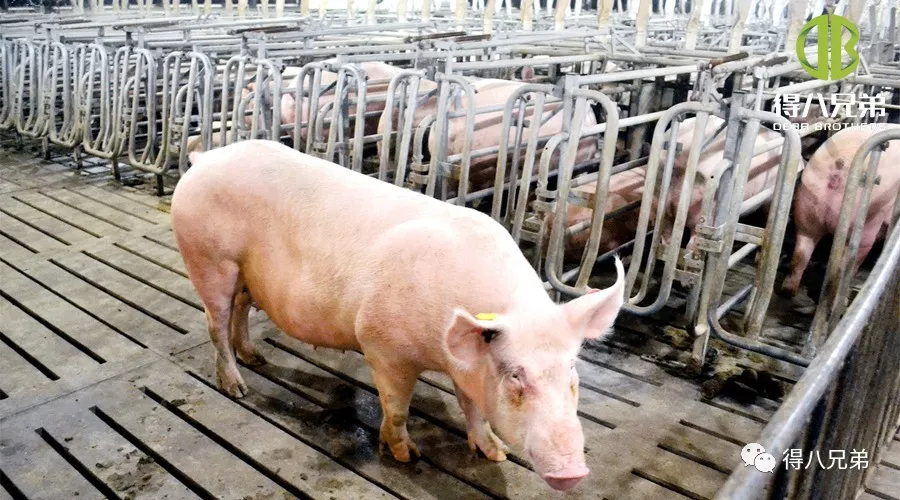
The gestation period is a special feeding stage for sows and a critical window for embryonic development of piglets. The physical condition of gestating sows directly determines piglet health and the service life of breeding sows. Production performance of gestating sows is affected by feed, genetics, nutrition, environment and other factors, among which feed exerts an especially prominent impact.
In the mid-1990s, due to hazards caused by antibiotic abuse and growing pressure for environmental protection, researchers began to focus on pollution-free, residue-free microbial preparations with outstanding functional properties. Today, microbial fermented feed technology has become a key strategic field for livestock industry development worldwide. In 2008, Lu Wenqing defined microbial fermented feed as biologically active feed or feed raw materials produced under artificially controlled conditions: using plant-based agricultural byproducts as main substrates, microorganisms decompose and synthesize anti-nutritional factors in plant, animal and mineral materials through metabolic reactions, generating nutrients that are easier for livestock to ingest, digest and absorb without toxic side effects. The production and application of microbial fermented feed have a long history and have attracted increasing research attention, evolving into a major research topic for the sustainable development of animal husbandry. This paper reviews the impacts of fermented feed on intestinal flora balance, reproductive performance, immune regulation and fecal characteristics of gestating sows.
1 Effects on Intestinal Flora of Gestating Sows
A healthy intestinal tract of sows maintains microecological balance through mutual interaction and restriction among diverse microbial communities. When alien microorganisms invade the intestinal ecosystem, indigenous flora will exert inhibitory effects to block colonization. Specifically, beneficial bacteria suppress the adhesion and proliferation of harmful microbes on intestinal mucosa via competitive exclusion.
Studies by Tuomola (1999) and Forestier (2001) demonstrated that probiotics in fermented feed stabilize normal intestinal microflora and inhibit pathogen colonization in gestating sows by interfering with microbial interactions, notably restraining the attachment of pathogenic bacteria such as Escherichia coli and Salmonella to intestinal epithelial cells.
In 2009, Jia Minghui et al. fed fermented feed to weaned piglets and found that the cumulative number of diarrheic piglets in the treatment group decreased by 16.7% compared with the control group. In 2007, Jin Zhuang et al. reported that lactic acid bacteria fermented feed improved disease resistance in pigs weighing 25–50 kg. Cao Xuejin et al. (2011) stated that fermented feed suppresses the proliferation of intestinal putrefactive bacteria, reduces the production of harmful metabolites including ammonia, indole and biogenic amines, and thus decreases the incidence of constipation and related intestinal disorders.
2 Effects on Reproductive Performance of Gestating Sows
A feeding strategy of restricted gestation feeding and ad libitum lactation feeding is commonly adopted for gestating sows. Abundant high-quality milk secretion during lactation is essential for piglet growth, which requires sufficient nutritional supply for gestating sows. Numerous studies have verified that diets supplemented with probiotic fermented feed greatly improve reproductive indicators including lactation capacity, milk quality, weaning weight and health status of piglets while meeting the basic nutritional demands of sows.
Alexopoulos (2004) and Taras (2005) supplemented sow diets with spores of Bacillus licheniformis, Bacillus subtilis and Bacillus toyoi, respectively, both recording higher total weaned piglet numbers and average weaning weights.
In 2006, Stamati et al. added Bacillus toyoi to the diets of late-gestation and lactating sows. On day 14 of lactation, milk fat and protein contents declined significantly in the control group while only mild declines were observed in the treatment group, with statistically significant differences between groups (p<0.05). Piglets from the treatment group had an average weaning weight 0.5 kg higher than those from the control group. Meanwhile, a high proportion of sows in the control group suffered from lactation disorders and MMA syndrome (Mastitis-Metritis-Agalactia). Additional research by Alexopoulos, Taras and Bohmer confirmed that dietary supplementation with Bacillus toyoi and Enterococcus faecium boosts feed intake and alleviates body weight loss in lactating sows.
3 Immune-Regulating Effects of Fermented Feed on Gestating Sows
Massively proliferated probiotics generated during feed fermentation exert prominent immune-promoting effects on gestating sows. Research confirms that probiotics stimulate cellular and humoral immunity of sows through their metabolites, cell wall components, genomic DNA and other bioactive substances.
Medina et al. (2007) found that live strains, structural bacterial molecules and genomic DNA of Bifidobacterium and lactic acid bacteria possess strain-specific immunomodulatory functions. Peng Sun and Suman Kapila et al. (2007) reported that fermented feed enhances cellular immunity in gestating sows by elevating local concentrations of immunoglobulins and stimulating secretion of IgA and IgG. IgG blocks viral adhesion in sow bodies, inhibits bacterial proliferation and stabilizes intestinal microflora balance. It is the only protective antibody that can pass through the placenta from gestating sows to fetuses, providing immune defense for embryonic early development.
In terms of humoral immunity, probiotics in fermented feed activate macrophages, T lymphocytes, NK cells and dendritic cells in intestinal mucosa to amplify the immune response of gestating sows.
In addition, probiotics accelerate small intestinal peristalsis to relieve or eliminate constipation in gestating sows. Treut et al. (2009) supplemented peri-parturient sow diets with Saccharomyces boulardii, which optimized fecal consistency and mitigated adverse impacts of stress on digestive functions. Wang Xuedong (2006) and Li Biao (2009) separately proved that active yeast supplementation remodels gastric microflora structure and facilitates proliferation of anaerobic bacteria and Bifidobacterium in gastric contents. In summary, probiotic fermented feed markedly reduces sow constipation, strengthens maternal immunity, improves fetal development and exerts long-term beneficial effects on offspring piglets.
4 Impacts of Fermented Feed on Fecal Characteristics of Gestating Sows
Feces from gestating sows contain large amounts of nitrogen, phosphorus and residual feed additives, which cause severe pollution to air, water and soil, with nitrogen and phosphorus posing the most prominent environmental risks. Nitrogen pollution mainly originates from incomplete degradation and utilization of crude protein in feed by sows. Data from Han Aiyun et al. (2004) indicated that 50%–70% of nitrogen in plant-based feed is excreted via feces. Currently, plant ingredients account for nearly 90% of commercial pig feed, containing 60%–80% total phosphorus. However, gestating sows lack endogenous phytase to break down phosphorus, leading to low phosphorus utilization efficiency. Excessive nitrogen and phosphorus excreted in pig manure severely degrade environmental quality.
Zhang Min et al. (2002) found that dietary probiotic fermented feed lowers dietary crude protein levels and induces phytase production to promote phosphorus absorption, thereby reducing nitrogen and phosphorus excretion. Liu Ruili et al. (2011) demonstrated that pigs weighing 65–100 kg fed compound probiotic fermented feed excreted 6.06 g less nitrogen and 3.97 g less phosphorus per day compared with the control group.
Overall, fermentation upgrades the quality of unconventional feed materials by drastically raising total probiotic counts and free amino acid levels, as well as increasing inorganic phosphorus content. When supplied to gestating sows, fermented feed improves nitrogen and phosphorus utilization, cuts nutrient discharge, and delivers both economic and environmental benefits.