- English
- Español
- Português
- русский
- Français
- 日本語
- Deutsch
- tiếng Việt
- Italiano
- Nederlands
- ภาษาไทย
- Polski
- 한국어
- Svenska
- magyar
- Malay
- বাংলা ভাষার
- Dansk
- Suomi
- हिन्दी
- Pilipino
- Türkçe
- Gaeilge
- العربية
- Indonesia
- Norsk
- تمل
- český
- ελληνικά
- український
- Javanese
- فارسی
- தமிழ்
- తెలుగు
- नेपाली
- Burmese
- български
- ລາວ
- Latine
- Қазақша
- Euskal
- Azərbaycan
- Slovenský jazyk
- Македонски
- Lietuvos
- Eesti Keel
- Română
- Slovenski
- मराठी
- Srpski језик

Pig House Ventilation Management: From Common Mistakes to Scientific Solutions – A Comprehensive Guide
"Why have these pigs been huddling together lately and eating so little? Could they be sick?" Brother Li, a pig farmer in Jiangxi, paced anxiously in the pig house as he stared at the leftover feed in the trough. It was not until he invited an animal husbandry expert that the problem came to light. When the expert lifted the ventilation windows on the roof of the pig house, a wave of hot, stuffy and humid air rushed out. The pigs were not ill — they were just suffering from a poorly ventilated pig house!
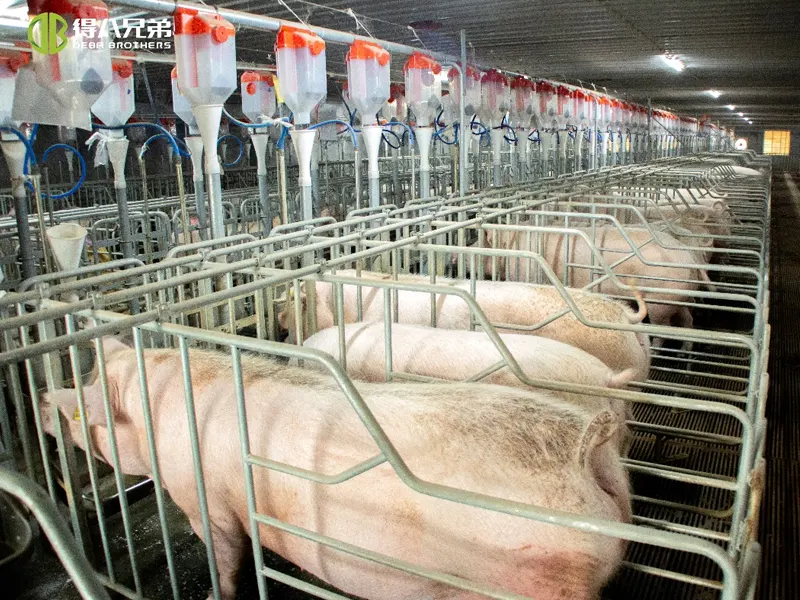
For those who have worked in the pig farming industry for years, it is common knowledge that "to raise pigs well, first manage the environment", and the core of environmental management is precisely the ventilation system that is easily overlooked. Many farmers focus on feed formulas and disease prevention, yet unreasonable ventilation quietly erodes their profits. Today, let’s talk about the "invisible yet critical" aspects of pig house ventilation.
I. Don’t Underestimate Ventilation — It Holds the "Invisible Switch" for Farm Profitability
Pigs are homeothermic animals, and their sensitivity to ambient temperature, humidity and air quality is far beyond our imagination. Once ventilation is inadequate, "invisible killers" will emerge in the pig house:
1. Accumulation of harmful gases such as ammonia and hydrogen sulfide
Excrement from pigs continuously produces harmful gases, whose concentrations rise rapidly under poor ventilation. In mild cases, they irritate the pigs’ respiratory mucosa, causing coughing, sneezing and weakened immunity; in severe cases, they trigger pneumonia and respiratory syndromes, driving up treatment costs and slowing growth rates.
2. Persistently high humidity accelerates pathogen breeding
Hot, humid environments are a "breeding ground" for bacteria, viruses and parasites. Especially in summer, humidity in poorly ventilated pig houses often exceeds 75%, increasing the risk of piglet diarrhea and sow postpartum infections by more than 30%, and drastically reducing survival rates.
3. Excessive temperature differences and frequent stress responses
In winter, doors and windows are tightly closed for heat preservation, creating temperature differences of up to 5–8°C inside the pig house, making piglets prone to colds; in summer, insufficient ventilation causes heat stress in pigs, leading to reduced feed intake and slower weight gain.
Sows may also suffer from miscarriages and decreased farrowing rates.
A large-scale pig farm once conducted a comparative experiment: under the same feed and management conditions, fattening pigs in the optimized ventilation group reached slaughter weight 7 days earlier, with a 0.15 reduction in feed conversion ratio, generating an extra profit of nearly 80 yuan per pig. This is the "invisible value" of scientific ventilation.
II. Choose the Right Ventilation Plan for Smooth "Breathing" in the Pig House
Pig house ventilation is not simply "opening windows or installing fans". It requires flexible design based on farm scale, pig growth stage and regional climate. There are three mainstream ventilation modes, each with its own advantages:
1. Natural Ventilation — Low Cost for Small and Medium-Sized Farms
Ventilation is achieved through air convection using roof ridges and side-wall shutters. It features low cost and low energy consumption, suitable for rural smallholders and small-to-medium farms with fewer than 500 pigs.
Key Points: The pig house should face away from the dominant winter wind direction; the ventilation ridge should be at least 30cm higher than the eaves; the opening area of side windows should be no less than 15% of the pig house floor area. In summer, it can be combined with cooling pads; in winter, wind baffles can be installed on ventilation windows to balance heat preservation and ventilation.
2. Mechanical Ventilation — Efficient and Stable for Large-Scale Farms
Mechanical ventilation is a more reliable choice for large-scale farms with more than 1,000 pigs. A system composed of fans, cooling pads and air ducts precisely controls air velocity, temperature and humidity.
· Negative Pressure Ventilation: The most commonly used mode. Fans are installed at one end to extract air, while cooling pads at the other end draw in fresh air, forming negative pressure airflow to quickly remove heat and harmful gases. Recommended wind speed is 2–3 m/s for fattening houses and 1.5–2 m/s for piglet houses, ensuring ventilation without causing chills.
· Positive Pressure Ventilation: Fresh outdoor air is filtered, heated or cooled by fans before being delivered into the pig house. It is suitable for breeding farms with high disease prevention requirements, effectively blocking external pathogens.
3. Intelligent Ventilation — Precise Control for Labor and Cost Savings
With the development of intelligent farming, intelligent ventilation systems have become increasingly popular among large pig farms. Temperature, humidity and carbon dioxide sensors monitor the pig house environment in real time, automatically adjusting fan speed, cooling pad opening and ventilation duration for unattended precise control.
After adopting an intelligent ventilation system, a 10,000-head pig farm in Shandong reduced management staff by 30%, stabilized ammonia concentration below 15 ppm, raised piglet survival rate from 88% to 95%, and saved over 200,000 yuan annually on energy and labor costs.
III. A "Pitfall Avoidance Guide" for Ventilation Management
Even with the right ventilation plan, improper management can severely undermine effectiveness. Farmers must avoid these common mistakes:
Mistake 1: Closing all vents in winter to keep warm
Many farmers seal the pig house tightly to prevent pigs from catching cold, leading to excessive harmful gases. Correct Practice: Ensure 3–4 ventilation sessions daily, 30–60 minutes each, preferably during midday when temperatures are higher, avoiding direct cold drafts on the herd.
Mistake 2: Installing as many fans as possible
Too many fans cause turbulent airflow and excessive local wind speed, triggering stress in pigs. Configure fans reasonably based on house area and power: 1–2 1.5kW fans per 100 ㎡ of fattening house are sufficient.
Mistake 3: Neglecting ventilation system maintenance
Dust buildup on fan blades and clogged cooling pads can reduce ventilation efficiency by more than 30%. It is recommended to clean fan blades weekly, flush cooling pads monthly, and inspect air ducts for air leaks quarterly to ensure stable operation.
IV. From "Making Do" to "Excellence": Ventilation Upgrades Drive Farming Progress
Today, the pig industry is transforming from extensive to intensive management. As the core of environmental control, ventilation is no longer a dispensable auxiliary step, but a "key variable" determining farming profitability. From Brother Li in Jiangxi, whose pigs recovered vitality after installing ventilation ridges, to large-scale farms in Shandong cutting costs and boosting profits through intelligent ventilation, more and more farmers realize that: good ventilation = good environment = good profits.
If you are still troubled by stuffy pig houses, slow growth and recurring diseases, start by upgrading your ventilation system. Choose the right plan and manage it properly to keep the pig house breathing smoothly — this will pave a steadier and broader path for your pig farming business.