- English
- Español
- Português
- русский
- Français
- 日本語
- Deutsch
- tiếng Việt
- Italiano
- Nederlands
- ภาษาไทย
- Polski
- 한국어
- Svenska
- magyar
- Malay
- বাংলা ভাষার
- Dansk
- Suomi
- हिन्दी
- Pilipino
- Türkçe
- Gaeilge
- العربية
- Indonesia
- Norsk
- تمل
- český
- ελληνικά
- український
- Javanese
- فارسی
- தமிழ்
- తెలుగు
- नेपाली
- Burmese
- български
- ລາວ
- Latine
- Қазақша
- Euskal
- Azərbaycan
- Slovenský jazyk
- Македонски
- Lietuvos
- Eesti Keel
- Română
- Slovenski
- मराठी
- Srpski језик

Liquid Feeding in Pig Farming: Five Key Advantages for Efficiency and Cost Savings
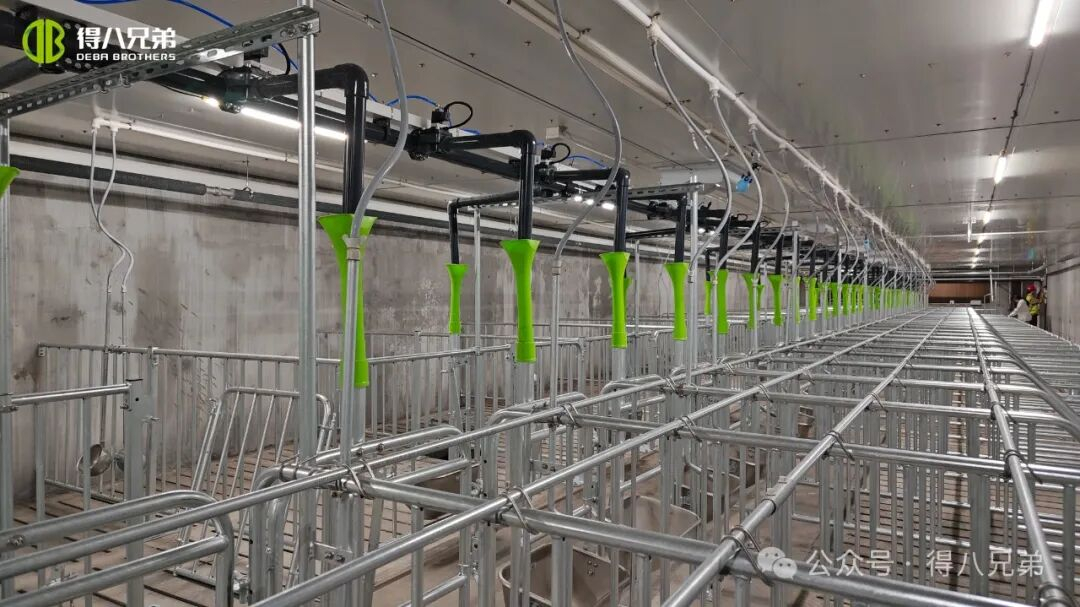
In the development of modern pig farming, innovative feeding technologies are constantly emerging, providing new ways to improve breeding efficiency and the health level of pigs. Among them, liquid feeding, as an advanced feeding method, is gradually being widely used worldwide. The research results of many international journals and papers show that liquid feeding has many significant advantages and can bring higher production efficiency and economic benefits to pig farms.
Improve Feed Conversion Efficiency and Reduce Feed-to-Meat Ratio
Studies by the British Meat and Livestock Commission show that the feed-to-meat ratio of fattening pigs fed with liquid feed is 2.3, while that of fattening pigs fed with dry feed lines in the same period is 2.6. This data clearly indicates that liquid feeding can significantly improve feed conversion efficiency. It is also pointed out in Improve performance with liquid feeding that various raw materials in liquid feed are fully soaked, soluble nutrients are dissolved in water, and feed particles absorb water and expand, with an increased surface area and a softer texture. This makes it easier for pigs to eat, digest and absorb, thereby improving the utilization rate of feed. For a pig farm with an annual output of 20,000 fattening pigs, if a liquid feed feeding system is used, compared with the dry feed line, each fattening pig can save 27.3 kg of feed during the fattening stage until slaughter, and the fattening pig house can save about 546 tons of feed throughout the year. In this way, the feed-to-meat ratio is effectively reduced, allowing pig farms to gain an advantage in market competition.
Reduce Feed Waste
In the process of traditional dry feed free feeding, feed waste is relatively common. However, liquid feeding adopts a centralized feeding method, which can accurately control the amount of feed fed, greatly reducing the occurrence of feed waste. Relevant studies have shown that liquid feed feeding can reduce feed waste by 5% compared with dry feed feeding. This not only helps reduce breeding costs but also improves the efficiency of resource utilization.
Increase the Utilization of Supplementary Foods and Reduce Feed Costs
The liquid feed feeding system has strong flexibility and can easily add various supplementary food products. Improve performance with liquid feeding mentions that by-products from the food industry or industry, such as liquid distiller's grains, molasses, dairy industry by-products, bakery by-products, etc., can be used as raw materials for liquid feed. These raw materials are relatively low in price and have a wide range of sources. Using these by-products can not only significantly reduce the cost of the feed itself but also realize the reuse of resources. At the same time, the liquid feed system facilitates the diversification of raw materials, and pig farms can flexibly adjust the feed formula according to the actual situation to further reduce feed costs.
Promote Intestinal Health and Reduce Disease Occurrence
Many studies have emphasized the positive impact of liquid feeding on the intestinal health of pigs. It is mentioned in Piglets Grow So Well on Liquid Feed! that 360 Duroc-Landrace-Yorkshire crossbred piglets with an average weaning weight of 6.98±0.15 kg were fed dry feed and wet feed respectively. The results showed that piglets fed wet feed (a form of liquid feed) were better than those fed dry feed in terms of average daily gain, average daily feed intake and average final weight. Moreover, after the liquid feed is fermented, a large number of probiotics multiply, and the lactic acid produced can effectively inhibit the reproduction of harmful bacteria and reduce the number of harmful bacteria in the pig's intestine, such as Salmonella. The low pH environment can also improve the activity of pepsin, promote protein digestion, reduce the proliferation of harmful bacteria in the hindgut of young animals, improve the intestinal structure and function, significantly increase the intestinal villus height and crypt depth of weaned piglets, and is beneficial to intestinal development. In addition, liquid feeding eliminates the inhalation of feed dust during feeding. Relevant research results show that compared with dry feed feeding, liquid feed can effectively reduce the dust content in the pig house by 10%-20%, reduce the incidence of respiratory diseases in pigs, and reduce respiratory diseases in breeders and pigs.
With its significant advantages in improving feed conversion efficiency, reducing feed waste, lowering feed costs and promoting pig health, liquid feeding is gradually becoming the development trend of modern pig farming. Numerous research results in international journals and papers provide strong evidence for the advantages of liquid feeding. If pig farms can reasonably adopt the liquid feeding system, they will surely take a solid step forward in improving breeding efficiency.