- English
- Español
- Português
- русский
- Français
- 日本語
- Deutsch
- tiếng Việt
- Italiano
- Nederlands
- ภาษาไทย
- Polski
- 한국어
- Svenska
- magyar
- Malay
- বাংলা ভাষার
- Dansk
- Suomi
- हिन्दी
- Pilipino
- Türkçe
- Gaeilge
- العربية
- Indonesia
- Norsk
- تمل
- český
- ελληνικά
- український
- Javanese
- فارسی
- தமிழ்
- తెలుగు
- नेपाली
- Burmese
- български
- ລາວ
- Latine
- Қазақша
- Euskal
- Azərbaycan
- Slovenský jazyk
- Македонски
- Lietuvos
- Eesti Keel
- Română
- Slovenski
- मराठी
- Srpski језик

How Great Is the Impact of Lactating Sows’ Nutritional Status on Piglets?
The nutritional requirements of lactating sows for energy, protein, lysine and other nutrients are determined by their body weight, milk production and breeding environment. However, under traditional feeding patterns, farmers cannot accurately assess sows’ weight and milk yield, so they feed arbitrarily merely based on sows’ appetite. If feeding management for lactating sows were truly that simple, why does the industry keep exploring optimal feeding solutions for the lactation stage? Research data shows a huge gap in the daily feed intake of lactating sows, ranging from 3.63 kg to 9.08 kg. While sow breeds, litter sizes, lactation periods and parities all lead to intake differences, the quality of feeding schemes and farrowing house management constitute the primary causes of drastic fluctuations in feed consumption.

Researchers from Aarhus University in Denmark point out that conventional feeding methods fail to fully meet the nutritional needs of lactating sows. Traditional pig farms commonly face four major challenges:
1. How to rapidly replenish water and nutrients for sows after farrowing to ensure sufficient milk supply?
2. How to address irritability, depression and poor appetite in post-partum sows?
3. How to differentiate nutritional intake standards for sows raising litters of varying sizes?
4. How to tackle poor feed palatability during lactation that hinders piglet growth?
In short, lactating sows are a special herd, requiring far more detailed management than nursery and finishing pigs.
Energy Requirements of Lactating Sows
Newborn piglets rely entirely on breast milk for growth, so it is critical for sows to produce abundant, high-quality milk. Long-term experimental data from Ifip in France indicates that each piglet consumes 700 to 900 grams of milk per day on average, and total milk demand rises proportionally to litter size.
Thanks to over thirty years of genetic improvement in pigs, modern sows produce 23% more piglets per litter than those 30 years ago, and their daily milk output has increased by 25% compared with two decades earlier. This trend continuously raises feeding standards and overall energy demands for lactating sows.
The 8th Spanish Pig Industry Symposium in 2016 gathered nearly 100 global pig industry practitioners. Experts at the conference put forward a core viewpoint: the health status of lactating sows directly determines piglets’ health and growth rate. Expert Jenny Salak Johnson stated that lactating sows commonly suffer from chronic long-term stress, which damages physical functions and triggers various diseases. Experiments prove that well-lit breeding environments and diets supplemented with probiotics and high fiber can relieve stress in sows. She also concluded that feeding interventions during gestation can improve the physical condition of offspring piglets, and this experiment clearly demonstrates the profound influence of sows’ nutrition and health on piglets.
The Influence of High Weaning Weight on Piglets
Piglets need 200 to 250 grams of breast milk to gain 1 kilogram of body weight. Relevant Ifip research confirms that piglets with heavier weaning weights grow faster in later stages. It follows that feeding management for sows exerts an indirect effect on piglets, ultimately determining the quality of market hogs and the overall breeding benefits of pig farms. The research findings are highly consistent with Jenny Salak Johnson’s theory, showing a positive correlation: the more adequate nutrition sows receive, the healthier piglets will be.
Rearing more robust and healthy piglets is one of the core goals of pig farming, which requires comprehensive consideration of pig farm management, swine genetics and animal nutrition. Frontline farmers are constantly seeking feeding solutions that can simultaneously enhance the physical performance of both sows and their offspring.
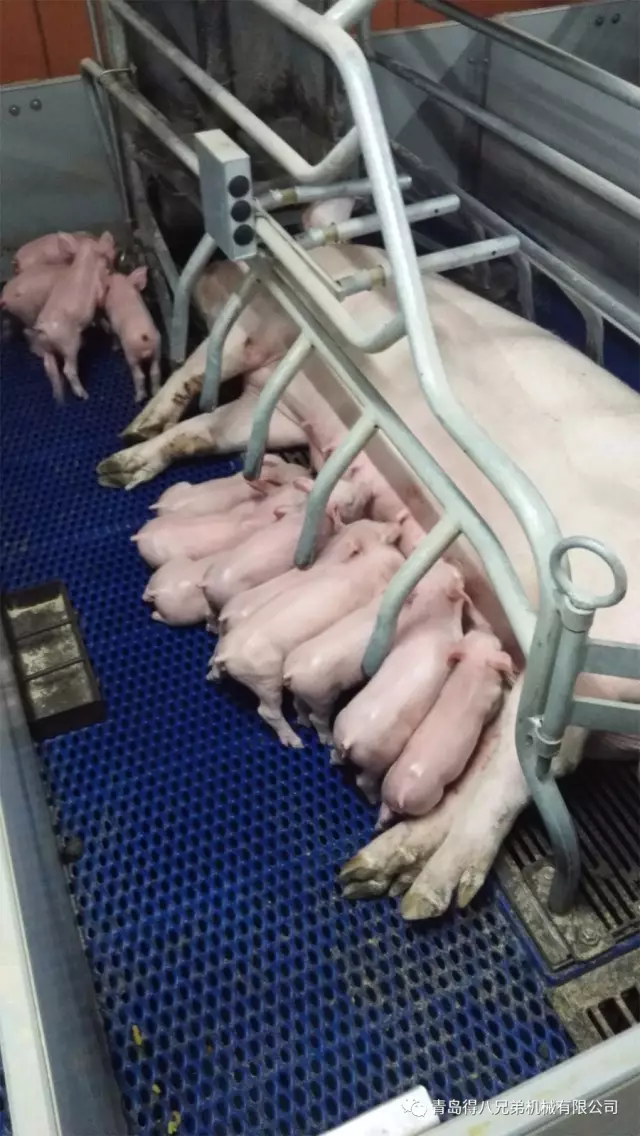
Adequate and balanced nutritional supply is the core prerequisite to maintain optimal physical conditions for lactating sows and guarantee the healthy development of newborn piglets. Scientific feeding management for lactating sows can guarantee their nutritional intake from five major aspects:
1. Reasonable Arrangement of Feeding Time
Sows tend to eat during cool hours in hot weather, so stable feed supply must be maintained in these periods to ensure sufficient intake. Feeding time can be flexibly adjusted through programmed control to realize round-the-clock feed provision and satisfy sows’ nutritional demands at any time.
2. Precise Feed Allocation Control
Differentiated feeding programs can be customized according to individual sow conditions. Residual feed in troughs is inspected before each feeding to ensure fresh feed and safe consumption. The wet feeding mode combining dry feed and clean water can increase sows’ feed intake by 7% to 12%, compared with feeding dry feed alone.
3. Balancing Intestinal Microflora
During lactation, the nutrients sows transfer to piglets via milk are approximately three times the amount they consume for basic self-maintenance. A healthy digestive tract serves as the foundation for efficient feed digestion and absorption. Constant access to fresh feed balances beneficial and pathogenic bacteria in the intestines, restrains the reproduction of harmful microbes, keeps farrowing beds clean, and greatly reduces the risk of diseases among newborn piglets. Around 70% of an animal’s immune system is located in the intestines, so protecting intestinal health is of great value for breeding.
4. Creating a Quiet Stress-Free Breeding Environment
Manual feeding with wheelbarrows easily disturbs sows and makes them agitated. Automated feeding avoids emotional stimulation caused by human operations. Sows eat voluntarily, effectively alleviating post-partum stress such as irritability and low mood.
5. Optimizing Overall Piglet Physical Condition
Improved feed intake and a stable, comfortable breeding environment boost sows’ lactation capacity, raising both milk yield and quality. This directly enhances piglet growth performance and produces weaners with heavier body weights and better health. Under the free-access feeding model of fresh feed and clean water, each piglet can gain an average of 149 grams per day.