- English
- Español
- Português
- русский
- Français
- 日本語
- Deutsch
- tiếng Việt
- Italiano
- Nederlands
- ภาษาไทย
- Polski
- 한국어
- Svenska
- magyar
- Malay
- বাংলা ভাষার
- Dansk
- Suomi
- हिन्दी
- Pilipino
- Türkçe
- Gaeilge
- العربية
- Indonesia
- Norsk
- تمل
- český
- ελληνικά
- український
- Javanese
- فارسی
- தமிழ்
- తెలుగు
- नेपाली
- Burmese
- български
- ລາວ
- Latine
- Қазақша
- Euskal
- Azərbaycan
- Slovenský jazyk
- Македонски
- Lietuvos
- Eesti Keel
- Română
- Slovenski
- मराठी
- Srpski језик

Core Advantages of Hot-Dip Galvanizing for Pig Farming Pen Equipment
High quality Solid bar gestation stall is offered by China manufacturers Deba Brothers®. Gestation crate regulate sow activity space and control, can effectively reduce the number of pigs required, and maximize the use of pig house space. The product use the whole hot galvanization craft, and service life is more than 20 years. Deba Brothers company's new steel tube gestation stall features a reversible rear door design similar to the classic farrowing crate. The rear door can be turned up to widen the aisle by 420 mm, which not only allows the pigs to have room for movement, but also facilitates the staff to chase pigs and other work activities.
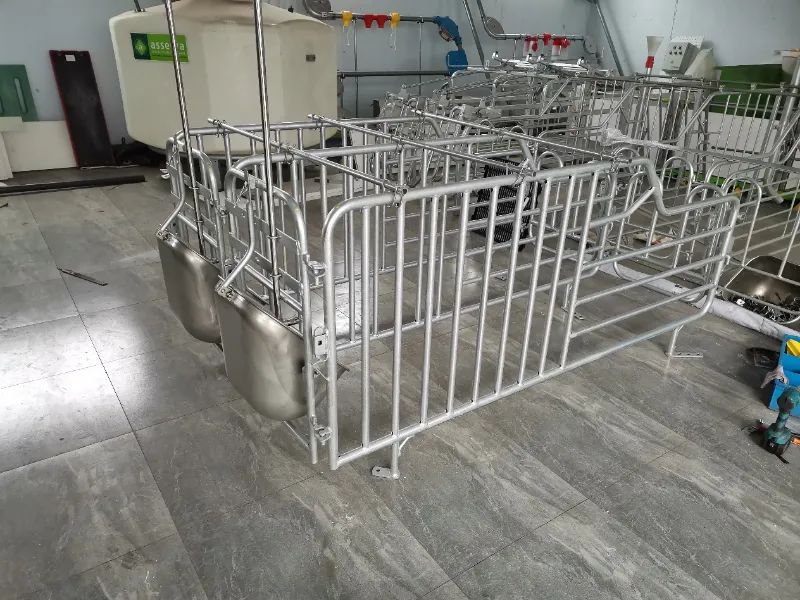
Large-scale pig farms constantly operate in harsh conditions featuring high humidity, corrosive manure and wide temperature fluctuations. Pens treated with ordinary paint or cold galvanizing will suffer extensive rust, perforation and deformation within just 1 to 3 years. Frequent equipment replacement drastically raises farming costs. Hot-dip galvanizing is the mainstream anti-corrosion process adopted by pig farms across Europe, America and Africa. It is also the standard surface treatment for all Deba Brothers sow farrowing crates, gestation stalls and nursery pens, boasting irreplaceable comprehensive benefits compared with other coating solutions.
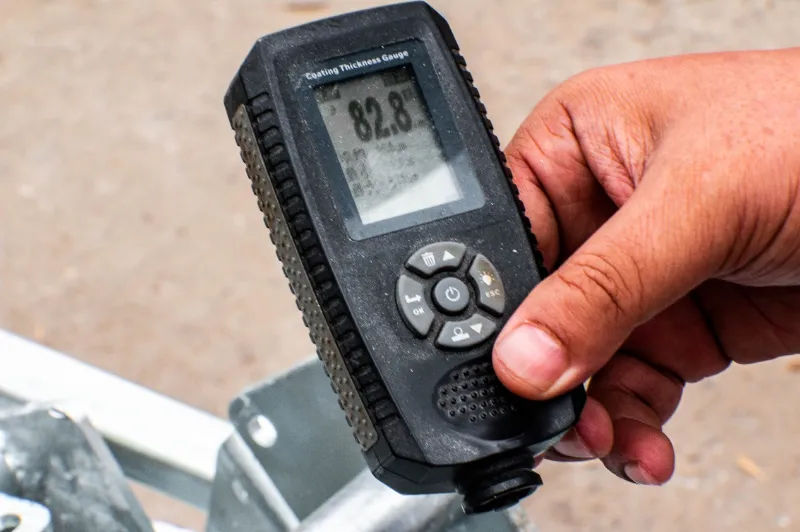
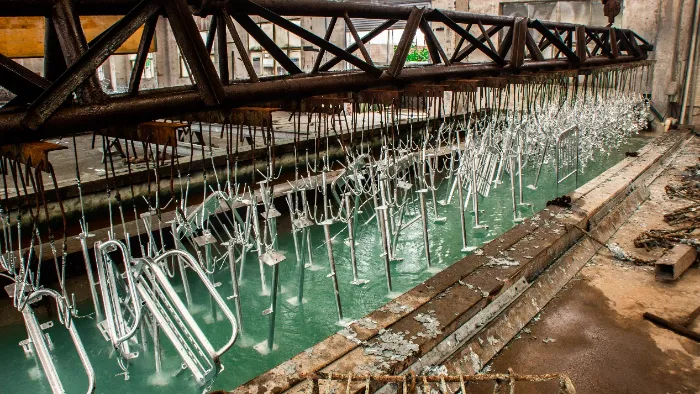
Full Coverage Coating for Omnidirectional Anti-Corrosion Protection
The hot-dip galvanizing process immerses the entire pen frame into molten zinc at high temperature. Uniform zinc layers form on weld seams, pipe interiors, bent gaps and bolt joints, eliminating incomplete or thin coating issues common with spray painting. Urine, manure vapor and moisture easily seep into tiny crevices of ordinary pens and trigger internal rust. Hot-dip galvanizing forms a dense zinc-iron alloy layer that blocks corrosive substances from both inside and outside the steel, fully resisting erosion from acidic/alkaline manure and damp air.
Excellent Impact & Abrasion Resistance for Heavy-Duty Farm Operations
Daily farm work such as driving pigs, forklift transportation and manure cleaning involves frequent collisions with pen frames. Paint or plastic powder coatings are thin and peel off after minor impacts, exposing bare steel to rapid rusting. Cold galvanized layers have low hardness and wear away quickly under friction. The zinc-iron alloy layer from hot-dip galvanizing delivers strong bonding strength, outstanding resistance to impact, friction and scratches. The protective layer remains intact during routine breeding operations with no need for touch-up painting.
Ultra-Long Service Life Cuts Equipment Replacement Costs
Ordinary coated pens only last 2 to 5 years. Severe rust distorts frames, creating safety hazards where sows and piglets may get trapped or injured, requiring full batch replacement. Field tests show hot-dip galvanized pig pens can serve over 20 years even in hot, humid outdoor farms in Africa and Southeast Asia. One-time procurement delivers long-term usage, slashing labor and material expenses for renovation, disassembly and repurchasing, offering remarkable cost performance over the equipment lifespan.
Resistant to Humidity, Heat & Salt Spray, Suitable for Global Farming Environments
Farms worldwide face vastly different climatic challenges: humid rainy seasons and heavy coastal salt fog in southern China; year-round high temperature, heavy rainfall and highly corrosive manure in Africa and Southeast Asia; extreme temperature swings in the Middle East. Hot-dip galvanized coatings feature stable resistance to acid, alkali, moisture and salt spray, unaffected by high heat, humidity or manure corrosion. They perform reliably in enclosed farrowing houses, open breeding zones and tropical overseas markets, adapting to farm conditions across all regions.
Non-Toxic & Compliant with Animal Welfare & Export Standards
Hot-dip galvanized zinc layers are chemically stable with no formaldehyde or toxic volatile compounds. Long-term contact does not trigger skin irritation or chemical burns in sows and piglets. This process meets livestock equipment inspection standards for the EU and global overseas farm imports, with no heavy metal leaching into drinking water or manure. It balances breeding safety and export compliance, ideal for complete pig farm equipment export orders.
Maintenance-Free Design Reduces Labor Workloads
Pens with painted coatings require annual rust removal and repainting. Farrowing houses contain massive numbers of pens, consuming excessive man-hours. Hot-dip galvanized pens need zero anti-corrosion maintenance after leaving the factory. High-pressure water flushing for manure cleaning will not damage the protective layer, eliminating rust and peeling issues and easing labor shortages in farrowing barns.
Integrated Structural Protection Prevents Weld Fractures
Weld joints are the weakest point prone to rust and breakage on standard pens. Hot-dip galvanizing forms a protective zinc layer inside weld seams to stop rust-induced cracking. It maintains the structural integrity of gestation stalls and farrowing crates, lowering risks of frame breakage from sow collisions that trap or injure livestock and improving overall barn operational safety.
Conclusion
With full anti-corrosion coverage, superior impact resistance, extended service life, cross-climate adaptability, maintenance-free performance and export certification compliance, hot-dip galvanizing stands as the optimal anti-corrosion solution for large-scale pig farms and export equipment. All Deba Brothers sow farrowing crates, round-tube gestation stalls and nursery pens adopt integral hot-dip galvanizing, fundamentally solving equipment rust problems. We help domestic and overseas pig farms cut replacement and maintenance labor costs and steadily boost long-term breeding profits.