- English
- Español
- Português
- русский
- Français
- 日本語
- Deutsch
- tiếng Việt
- Italiano
- Nederlands
- ภาษาไทย
- Polski
- 한국어
- Svenska
- magyar
- Malay
- বাংলা ভাষার
- Dansk
- Suomi
- हिन्दी
- Pilipino
- Türkçe
- Gaeilge
- العربية
- Indonesia
- Norsk
- تمل
- český
- ελληνικά
- український
- Javanese
- فارسی
- தமிழ்
- తెలుగు
- नेपाली
- Burmese
- български
- ລາວ
- Latine
- Қазақша
- Euskal
- Azərbaycan
- Slovenský jazyk
- Македонски
- Lietuvos
- Eesti Keel
- Română
- Slovenski
- मराठी
- Srpski језик

Precise Nutrition & Scientific Management: Empower Efficient Breeding of Gestating Sows — Debabrother Helps Pig Farms Improve Quality and Efficiency
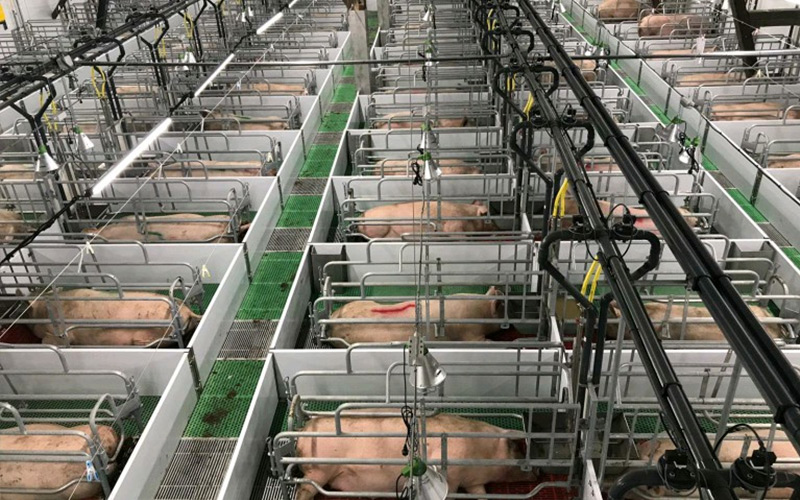
The gestation period is the core profit-making stage for pig farming. The 114 days from mating to delivery not only affect the health and subsequent reproductive performance of sows themselves, but also directly determine piglet survival rate, birth weight and overall economic benefits of pig farms. As a benchmark enterprise with 16 years of in-depth cultivation in animal husbandry, Debabrother draws on advanced European breeding models and localized practical experience. Focusing on nutritional demands and feeding management pain points of gestating sows, we adopt dual driving forces of scientific solutions and intelligent equipment to help pig farms realize optimized sow feeding, improved fetal development and sustained profit growth.
1. Accurate Body Condition Control to Consolidate Breeding Foundation
Body condition management is the core of gestation period feeding. Backfat thickness and weight control exert a direct impact on embryonic development, smooth delivery and postpartum lactation performance. Based on the French Asserva breeding model, Debabrother sets targeted backfat thickness standards for sows at different stages to support refined feeding management:
• Gilt: 15-17mm, ensuring sufficient physical fitness and complete reproductive function for first mating;
• Weaned Sow: 16-17mm, facilitating rapid body condition recovery and timely estrus and mating;
• Peripartum Sow: 20-21mm, storing adequate energy for delivery and reducing the risk of dystocia.
Meanwhile, we establish a dynamic weight management system for sows of different parities: primiparous sows weigh about 230kg before delivery and 210kg after delivery; the weight rises gradually with subsequent parities, and stabilizes at 310kg before delivery and 290kg after delivery for the fifth parity. Strict body condition control avoids abortion and dystocia caused by over-fat sows, as well as fetal dysplasia and postpartum agalactia caused by underweight sows, so as to guarantee breeding quality from the source.
2. Stage-based Precise Feeding to Meet Full-cycle Nutritional Needs
Gestating sows have significantly different nutritional demands at various physiological stages. Blind feeding will easily lead to feed waste and unbalanced sow body condition. Following the principle of stage adaptation and on-demand supply and combining fetal development rules, Debabrother divides the gestation period into three phases and develops customized feeding schemes:
2.1 Early Gestation (Day 0 to Day 21 after Mating): Energy Control for Stable Embryo Implantation and Backfat Reserve
This is the critical period for embryo implantation, during which about 77% of feed energy is used for backfat accumulation. Strict feed restriction is required to prevent high energy intake from causing embryonic death. Individual feeding is recommended, with low-energy and high-fiber daily ration. Crude fiber improves intestinal function and appetite, carbohydrates provide main energy, matched with low-level amino acids. Daily feed intake shall be controlled within a reasonable range to ensure stable embryo implantation and lay a solid foundation for subsequent fetal development.
2.2 Mid Gestation (Day 22 to Day 60): Balanced Nutrition for Fetal Development
Fetal organs and bones develop rapidly with gradually increasing nutritional demands. Approximately 20kg of feed energy is required for the growth of each litter of piglets. This stage focuses on balancing energy, protein and minerals to maintain moderate body condition of sows. It prevents fetal compression caused by over-fat sows and retarded fetal growth caused by underweight sows, making a smooth transition for nutritional supplementation in late gestation.
2.3 Late Gestation (Day 61 to Day 114): High-energy Supplement for Fetal Growth and Energy Reserve
90% of fetal weight gains in this stage, which is the peak period of nutritional demand. Feed intake and nutritional concentration need to be greatly increased to support rapid fetal growth and sow lactation reserve. Feed shall be gradually reduced 5-7 days before delivery and stopped on the delivery day to avoid dystocia caused by gastrointestinal distension. Two meals per day within the first three days after delivery can significantly lower piglet mortality. Increased feeding frequency can further improve sow feed intake and accelerate postpartum recovery.
Feed quality control is also essential. Moldy, deteriorated, frozen or highly irritating feed is strictly prohibited to prevent abortion, stillbirth and weak fetuses. Stable feed formula is required to reduce stress caused by frequent formula replacement and ensure normal feed intake and digestion of sows.
3. Solve Core Management Pain Points with Intelligent Breeding for Cost Reduction and Efficiency Improvement
For large-scale pig farms with 5,000 sows, feeding management needs to realize precise individual feeding while meeting differentiated nutritional needs of each sow. Traditional manual feeding lines feature low efficiency and large feeding errors, while conventional Electronic Sow Feeding Stations (ESF) come with high procurement costs, failing to balance economic benefits and practical operation.
Debabrother launches innovative Electronic Feeding Station for Gestating Sows, which perfectly solves industry bottlenecks and integrates European animal welfare standards with localized adaptation advantages:
• Precise Feeding with Zero Waste: The intelligent system controls individual feed dosage accurately and supplies feed on demand to eliminate feed waste;
• Synchronized Water and Feed Supply: Water is supplied simultaneously with feeding to improve feeding efficiency and relieve sow constipation caused by insufficient drinking water;
• Low Stress for Welfare Breeding: Independent zoning for gilts avoids feeding competition and fighting stress among sows, complying with the modern animal welfare breeding trend;
• Cost and Space Saving: It saves 20% of barn area, with lower equipment cost than traditional ESF systems. Flexible modular combination fits various layouts of different pig farms;
• Digital Intelligent Management: The supporting software automatically collects feeding data and realizes centralized management. Real-time monitoring on sow feed intake and body condition supports refined farm management decisions.
4. Focus on Industry Pain Points to Empower Full-chain Industrial Upgrading
Over the past 16 years, Debabrother has always rooted in front-line breeding scenarios and focused on full-cycle sow breeding management. We have built a three-in-one solution covering professional technology, intelligent equipment and full-process service, ranging from customized nutritional schemes and unified feeding standards to independent R&D of intelligent feeding equipment. Up to now, we have served more than 1,380 large-scale breeding projects worldwide, helping pig farms achieve core goals including healthier sows, stronger piglets and higher economic returns.
In the future, Debabrother will keep focusing on feeding and management pain points of gestating sows. We will integrate advanced European breeding experience with domestic breeding demands in China, continuously optimize nutritional formulas, upgrade intelligent feeding equipment and improve technical service systems. Empowering animal husbandry via technology and creating value via professionalism, we will facilitate the transformation of China’s animal husbandry industry towards refinement, intelligence and animal welfare, and contribute more to rural revitalization and the construction of a powerful agricultural country.